You signed a lease on a space in Rolling Hills, and now the clock is running. Rent starts whether the suite is ready or not. Maybe it was a nail salon and you want a coffee shop. Maybe it is open shell space with a concrete floor and one electrical panel. Either way, the gap between an empty room and an open business is real work, and it needs someone who knows how building in the Central Valley actually goes.
That is where a commercial contractor earns the fee. Not just swinging hammers, but reading the space, the lease, the code, and the ground under the slab. Fresno area soils have a way of complicating projects that look simple on paper.
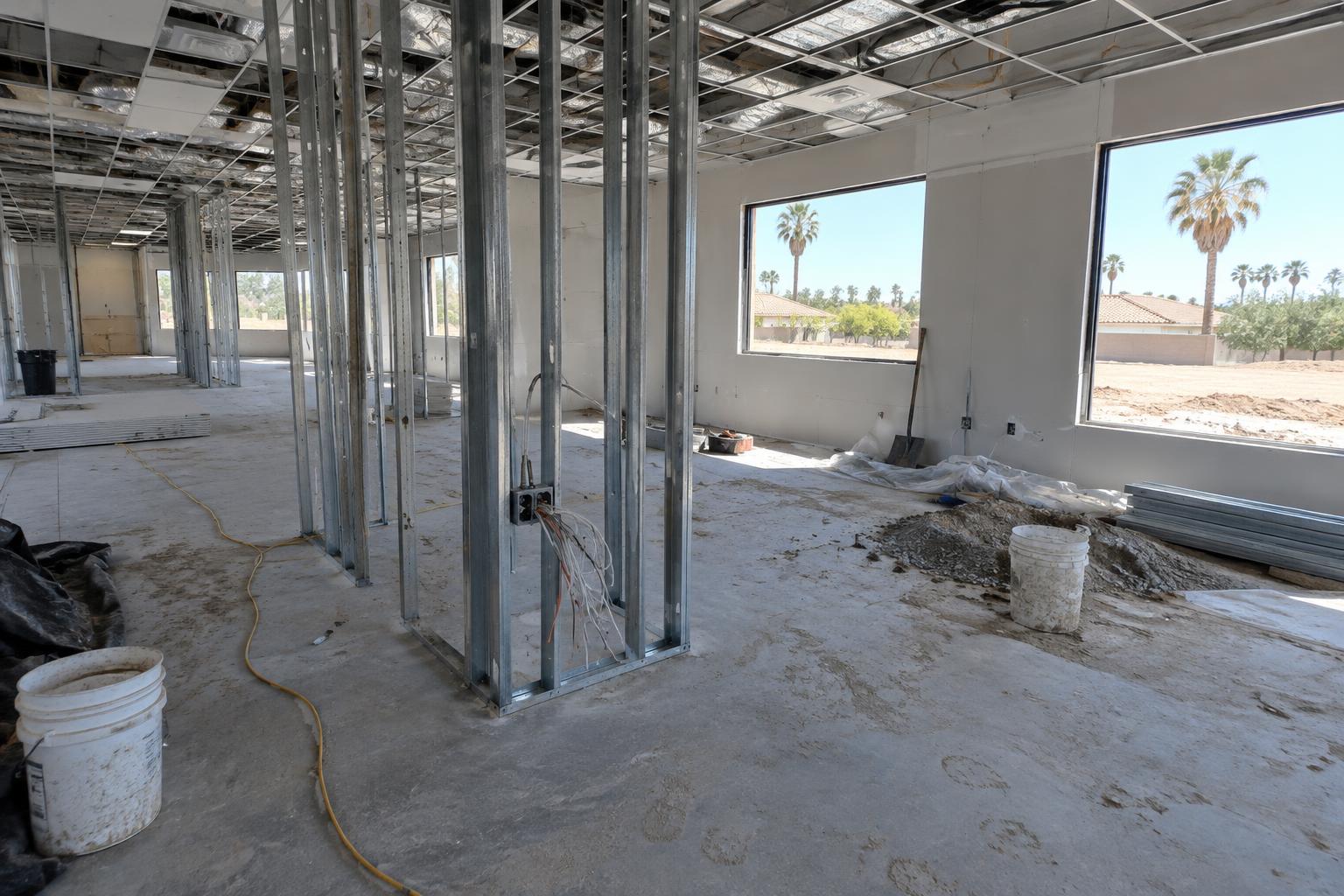
Most Rolling Hills build-outs start with demolition of whatever the last tenant left. Old partition walls come out. Abandoned plumbing gets capped. Then the real sequence begins. Metal stud framing lays out your new floor plan. Electrical and plumbing rough-in goes in the walls and under the slab where it has to. Inspectors check that work before anything gets covered.
After rough-in passes, drywall goes up, the ceiling grid gets hung, and HVAC gets balanced for the new layout. Flooring, paint, casework, and signage follow. A clean sequence keeps trades from tripping over each other, and it keeps your opening date from slipping week by week.
We handle this kind of work as a Commercial Contractor in Rolling Hills, and the planning up front is what keeps the middle from turning into chaos.
The expansive clay and adobe soils around Fresno move with moisture. They swell when wet and shrink when the summer heat bakes them dry. For a commercial slab, that movement shows up as cracks, uneven floors, and doors that stop closing right.
If your space needs new plumbing trenched through the slab, or a section cut out for a grease interceptor, how that concrete gets patched matters. Proper compaction, the right base, and attention to moisture under the slab all affect how the floor behaves a year later. Cutting corners here is the kind of thing nobody sees until the flooring telegraphs every crack through the vinyl.
Hot dry summers also push HVAC harder. A restaurant, a gym, or a retail floor packed with customers needs cooling sized for the load, not just the square footage.
Commercial permits run differently than a home remodel. Accessibility compliance comes into play. Restrooms, parking paths, door hardware, and counter heights all have to meet code. Occupancy type drives fire and exiting requirements. A change of use, say office to food service, often triggers more review than a straight cosmetic refresh.
The way to keep a project moving is to get the drawings right before submittal and answer plan check comments quickly. We coordinate with the local building department and the trades so inspections line up in the right order. That rhythm matters. One missed sign-off can hold up everything behind it.
If you want to confirm we cover your location, Our Rolling Hills Service Area page lists the neighborhoods and nearby towns we build in.
A commercial space takes abuse a home never sees. Carts, foot traffic, cleaning crews, and constant door swings wear on everything. So the finish choices should match the use. Commercial grade flooring, scrubbable wall coatings, solid door hardware, and durable casework pay off over the life of the lease.
Lighting deserves attention too. The right layout changes how a retail product looks and how comfortable an office feels through a long Valley afternoon. We walk through these choices with you so the look fits the brand and the budget fits the lease term.
Many Rolling Hills suites sit in shared buildings or busy centers. Noise, dust, and parking all affect the businesses next door. A good commercial contractor sequences loud demolition and manages debris so the neighbors can keep operating. If you are building out while an adjacent tenant stays open, that coordination is part of the job.
We keep the site clean, protect what stays, and keep you informed as milestones pass. You should always know what happens next and what it depends on.
If you are weighing a space or already holding keys, a walkthrough is the best first step. Call Ben-Rick Construction at (559) 257-2397 and we will look at the space with you.
Ready to talk through your Rolling Hills project? Here are a few questions we hear often.
Commercial work brings in accessibility code, occupancy requirements, fire and exiting rules, and often heavier mechanical and electrical systems. The sequence and inspections are built around how the space will be used by the public and staff, which shapes the whole plan from the start.
Yes. We sequence noisy demolition, control dust, and manage debris and parking so neighboring tenants can keep operating. Coordination with building management and clear scheduling are part of how we run a shared-site job in Rolling Hills.
Look at the existing floor for cracks and unevenness, and find out where the plumbing and electrical service enter. Central Valley clay soils move with moisture, so understanding the slab and any trenching your layout needs helps you budget accurately before you commit.
Free assessment and a written estimate from a local crew.
Call (559) 257-2397